
Why Does Astrology Work?
Many people fall into one of two camps.
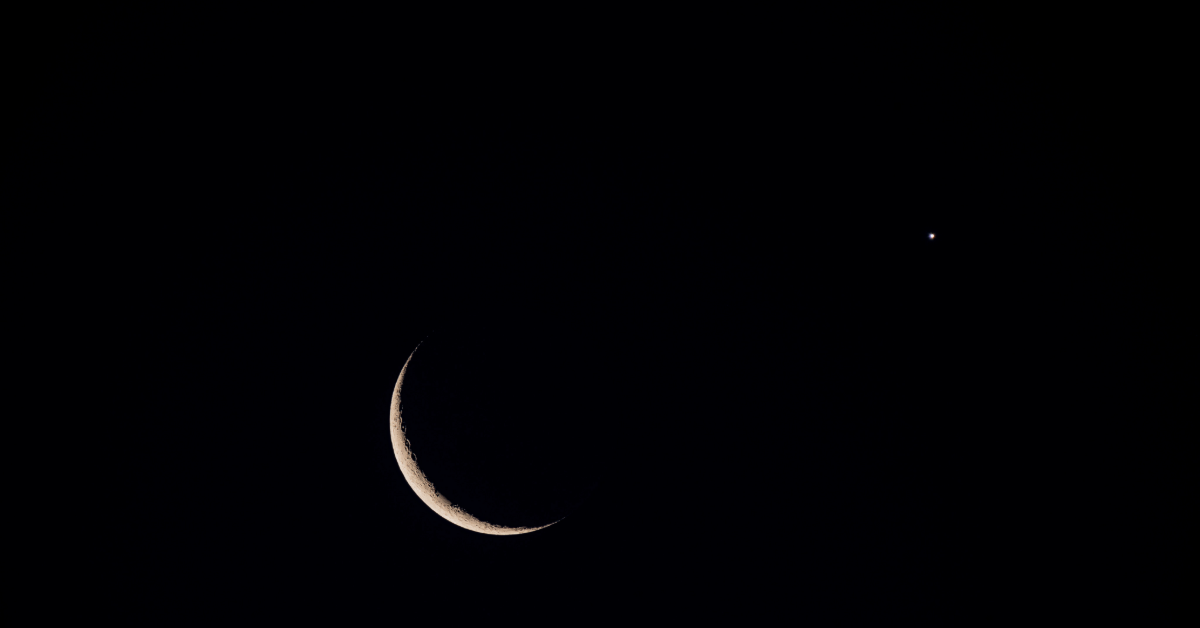
A Question Worth Asking
In a recent workshop I led on chart interpretation, a participant asked a fabulous question.
"Why does having six planets in Aries actually affect us? Is it gravitational pull? Is it mythology? Is it historical observation? What is it?"
I love this question. I think a lot of people have it, and it doesn't always get asked — especially in astrology spaces where we tend to dive straight into what the planets are doing without pausing to ask why any of this matters. So let's talk about it.
Two Boxes (And the Space Between Them)
When it comes to a view of astrology, many people fall into one of two camps.
Camp One says: "I love astrology, it works for me, and I honestly don't care how it works. I'm a believer no matter what."
Camp Two says: "Astrology is a pseudoscience. It's not proven, and there's no mechanism for it. Belief in astrology is misguided and superstitious."
But I think both extremes miss the truth of what astrology is and does. A lot of us — certainly me, and maybe you too — live somewhere in the middle. Not blindly believing, but not dismissing it either. We're in that beautiful space of curiosity and wonder, where we're genuinely asking: Why does this seem to be true? Why does it keep giving us useful insight?
That's the spirit I want to explore here.
Three Reasons Astrology Works (And One More)
1. Gravitational Pull
This is usually the first explanation people reach for, and honestly, it's probably the weakest of the bunch. Yes, the moon's gravitational pull affects the tides — and perhaps affects us in ways we don't fully understand. But the depth and nuance of what astrology describes goes far beyond what any gravitational effect could account for. That said, there may be physical mechanisms at play that science simply hasn't caught up to yet.
2. Mythology — A Living Relationship with the Sky
This one is rich and worth sitting with.
Long before electric lights, our ancestors had an intimate, unmediated relationship with the night sky. Every evening, the heavens were right there — vast, luminous, and full of movement. And what our ancestors noticed, across every culture and every part of the world, was that some of those lights moved. They called them wandering stars — which is literally what the word planet means.
Over generations, sky-watchers began to notice patterns. When Mars appeared in a certain part of the sky, certain kinds of events tended to unfold on Earth. When Venus moved in a particular way, something else seemed to shift. These observations became stories. The stories became mythology. And the planets became gods — each with their own personality, their own domain, their own complex and very human-feeling dramas.
This mythology is not separate from us. It grew out of human experience on Earth. It is, in a very real sense, a map of the human psyche projected onto the cosmos.
3. Historical Observation
This is where things get really fascinating — and where the work of historian Richard Tarnas comes in.
Tarnas is best known for The Passion of the Western Mind, a widely used college history textbook. But he also wrote Cosmos and Psyche, a sweeping, meticulously researched book that correlates major historical events on Earth with planetary cycles — particularly the slower-moving outer planets. The patterns he uncovered are striking. This isn't anecdote; it's a serious historical analysis.
If you're someone who needs evidence before you can engage with a new idea, Tarnas is a wonderful place to start.
4. Try It and See
And then there's the most personal reason of all: it works.
The first time I had an astrological reading, it felt like someone had taken an X-ray of the inner parts of me. They described things I had never told anyone. That experience changed everything for me. Not because I decided to believe in astrology no matter what, but because I became genuinely curious about a tool that could offer that kind of insight.
That curiosity has never left me. And it's what keeps me here, unpacking these planetary energies with you, because astrology gives me an endless source of insight into what we're experiencing, why we're experiencing it, and how to take care of ourselves through it.
A Multi-Dimensional Language
Ultimately, I think astrology works on all of these levels at once — physical, mythological, historical, and personal. It's a multidimensional symbolic language, and like any rich language, it can describe things that other frameworks can't quite reach.
It speaks to our times. It speaks to our inner lives. And it invites us to engage with both with more awareness, compassion, and curiosity.
You don't have to have it objectively proven to benefit from it; in fact, I think it helps to have a healthy skepticism. But your ability to connect with a sense of wonder can never be ignored. It is deeply true, and deeply human.
Comments ()